The context is what your agent actually knows
AI doesn't remember you. It reads. This is the document it reads.
What you'll walk away with
- A prompt that interviews you and writes your background file, finished and ready to save
- Where to put it in Claude or ChatGPT so you stop re-explaining your business every time
- The six things that go in it, and why handing over everything you own makes the answers worse
About fifteen minutes, most of it answering questions.
Write Yours Now
This is the whole job, and it takes about fifteen minutes. Paste this into Claude or ChatGPT exactly as written and answer its questions. It interviews you one question at a time about your business, your clients, how you talk and what is going on right now, then writes your background file and shows it back to you finished. Nothing to fill in afterwards.
Where To Put What It Writes
Copy the finished file out of the chat and save it somewhere you can find it again. A document, a note, whatever you already use. That saved copy is the master, and everything below is just a way of getting it in front of the AI before it starts work.
In Claude. Make a Project and add the file to that Project's knowledge. Every chat you start inside the Project can see it, so you stop re-explaining your business at the top of every conversation. If you would rather not use a Project, attaching the document to a chat works exactly the same way for that one chat.
In ChatGPT. Same shape. Make a Project and add the file to it, or upload the document at the start of a chat when you want it for one conversation only.
Anywhere else. Whatever your work has given you, the pattern holds even when the menu names do not. If there is a place to attach files or add knowledge, that is where it goes. If there is not, paste the text at the top of the chat before your first question. That is not a downgrade, it is the same information arriving by hand.
One honest note on all of this. Nothing here syncs. The AI is reading the copy you gave it, not looking at your live business, so when something changes you go and update the file yourself. Worth a note in the diary once a month rather than trusting it to keep up on its own.
Why It Works
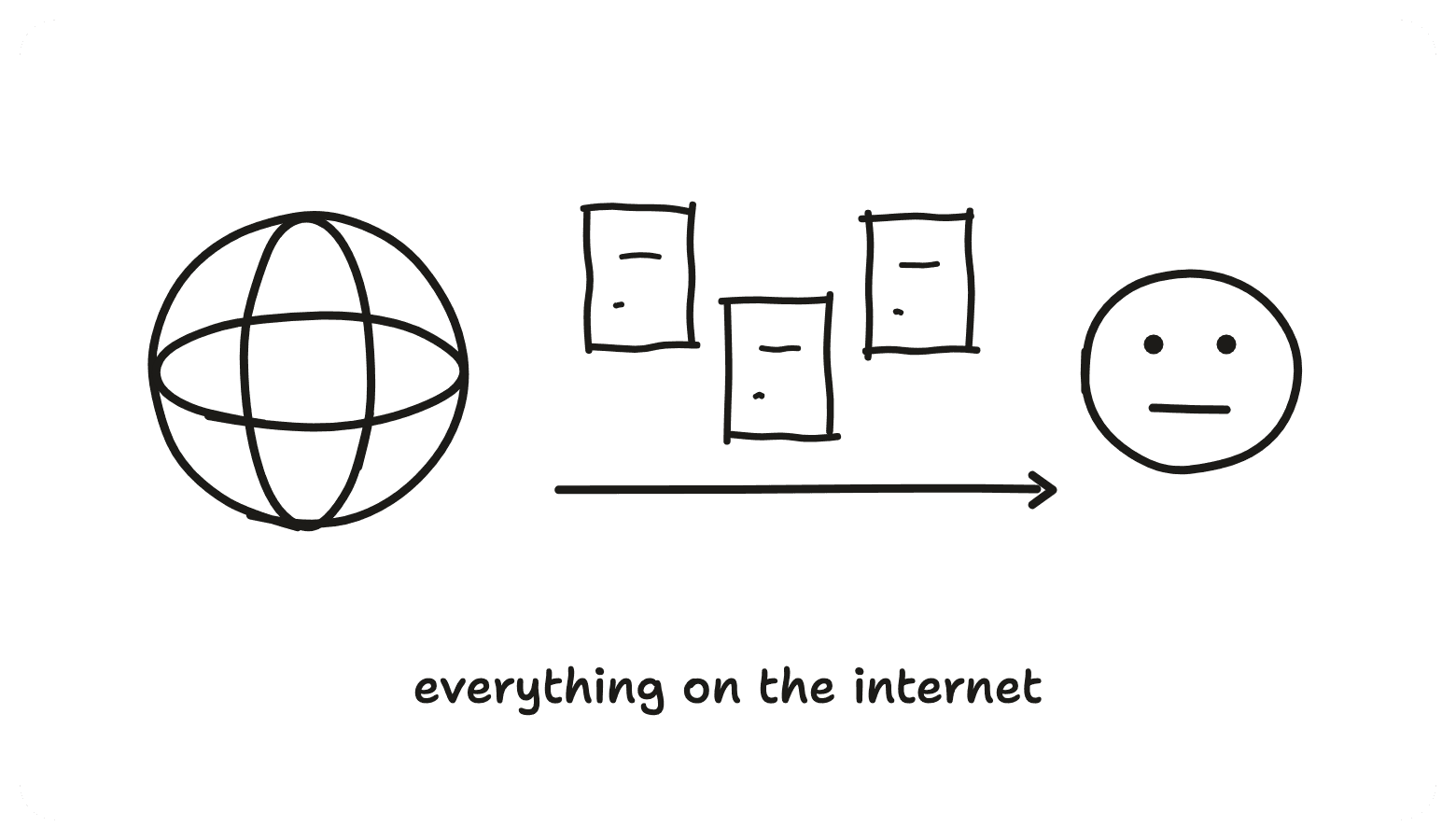
There is this feeling that AI is magical, and it sort of is. It has read everything on the internet, basically all human knowledge, and that is what makes it so good at so many things. It is also what makes it so bad at others, because the other things tend to be the things that are not on the internet. They are not written down anywhere. They are in your head. Your way of doing things, your clients, what you would never do, and what really matters this week.
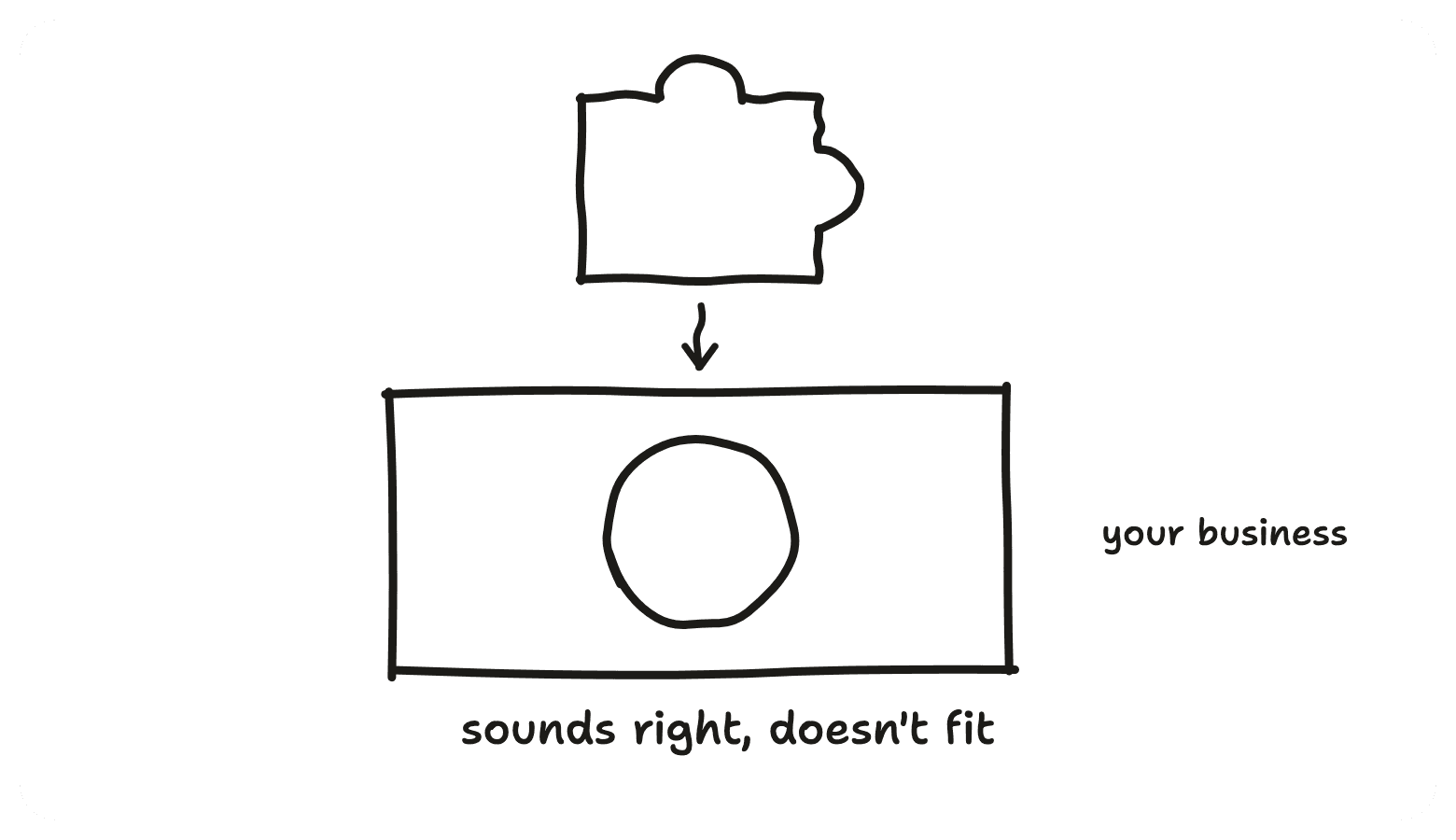
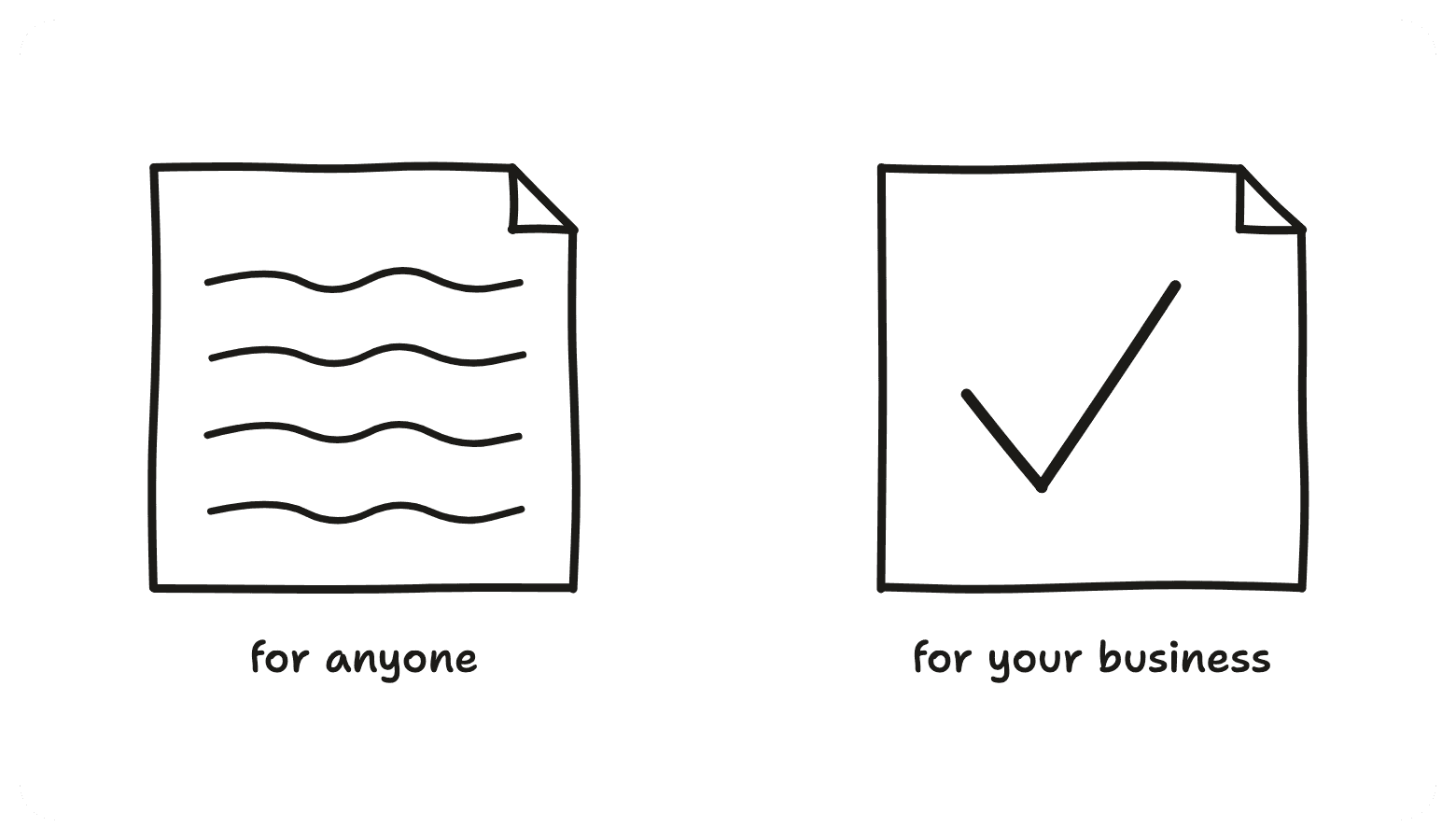
Which is why, when you ask it something about your work, the answer could have been written for literally anyone. Generic advice that sounds right and does not fit your business at all. It is not that the AI is bad.
Here is the bit most people miss. AI does not know things about you, and it does not remember. It reads. Every task starts from a blank page, and it only knows what is in front of it at that exact moment. So when the answer sounds generic, it is guessing at everything you did not show it.
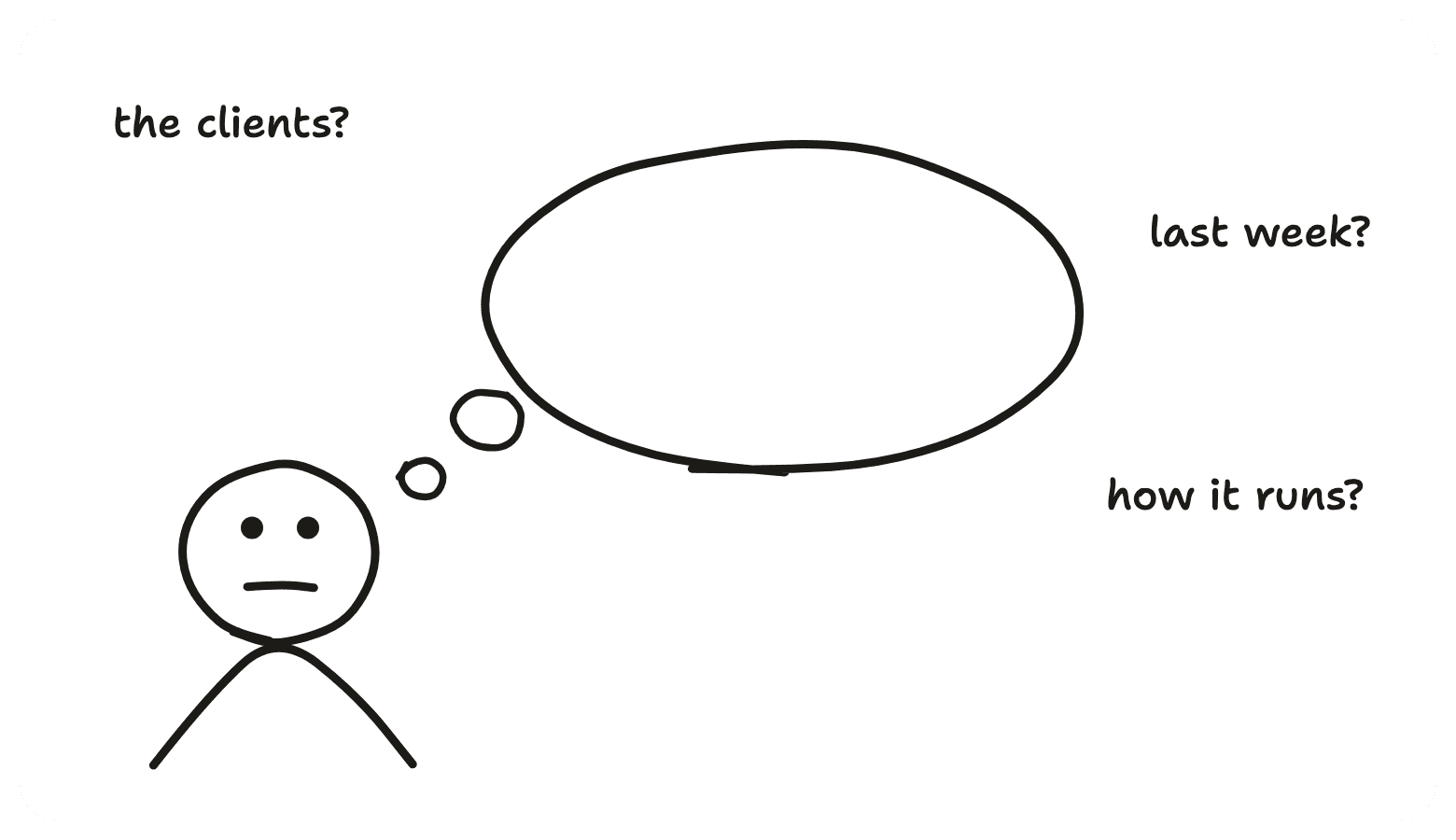
Think of an agent with a brief and its apps connected as a new starter on day one. The handbook is written, the computer is set up, the logins all work. But nobody has actually told them anything. Who the clients are, what happened last week, how this place really runs. They are smart, they are set up, and they are completely uninformed.
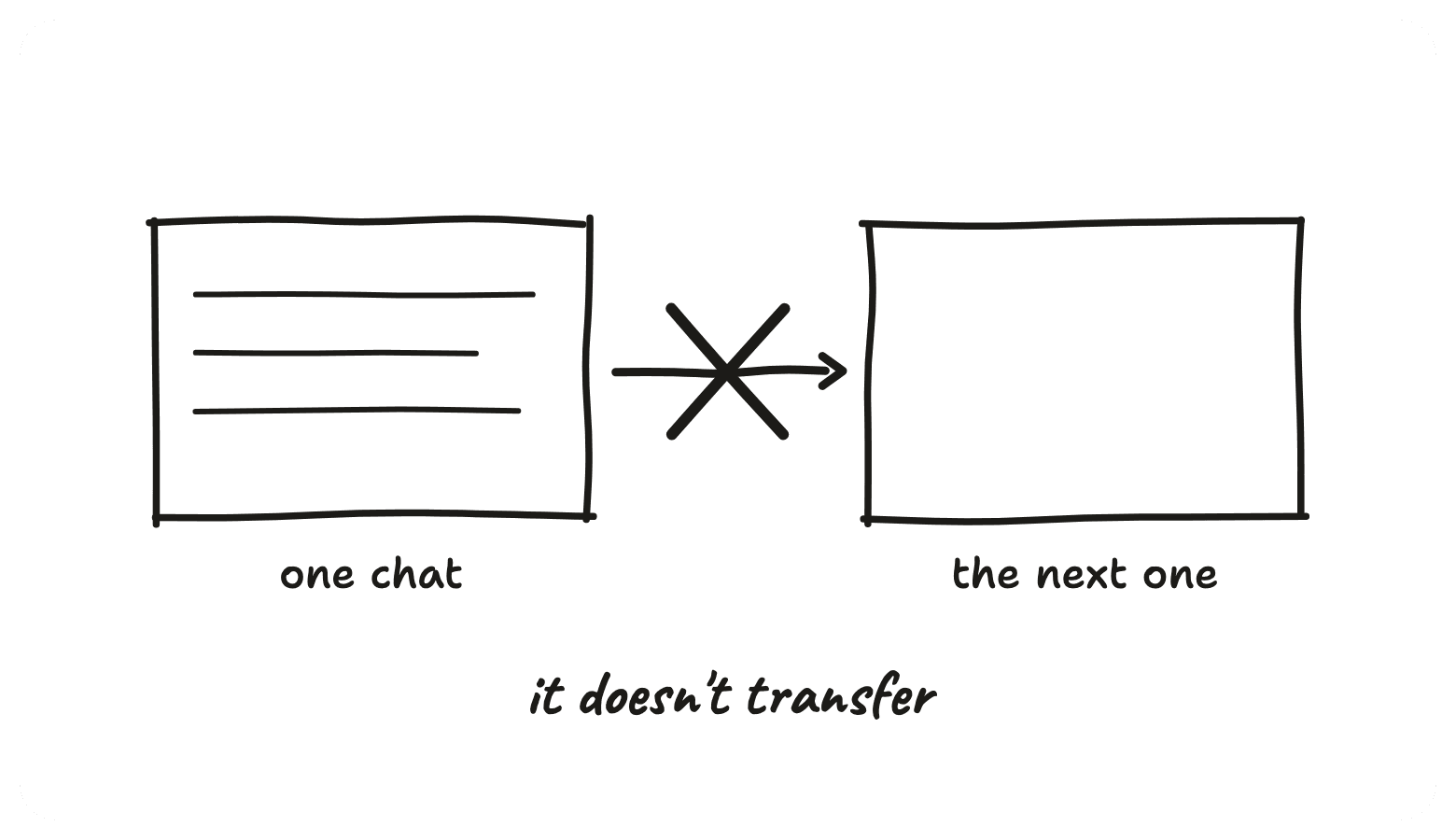
And maybe you have told it all of this before, once, in a chat that went well. But that does not transfer. The next chat starts from the same blank page, which is why the fix is a document you write once rather than a conversation you keep having.
That document is the context, the background file. It is the information pack you would hand a real new starter in their first week, and it is the difference between advice that could be for anyone and an answer that actually sounds like your business.
What Goes In It
Six sections, a few lines each, written the way you would explain the place to someone on their first morning. This is what the interview above walks you through, so if you have already run it you have all of this. If you would rather write yours by hand, start here.
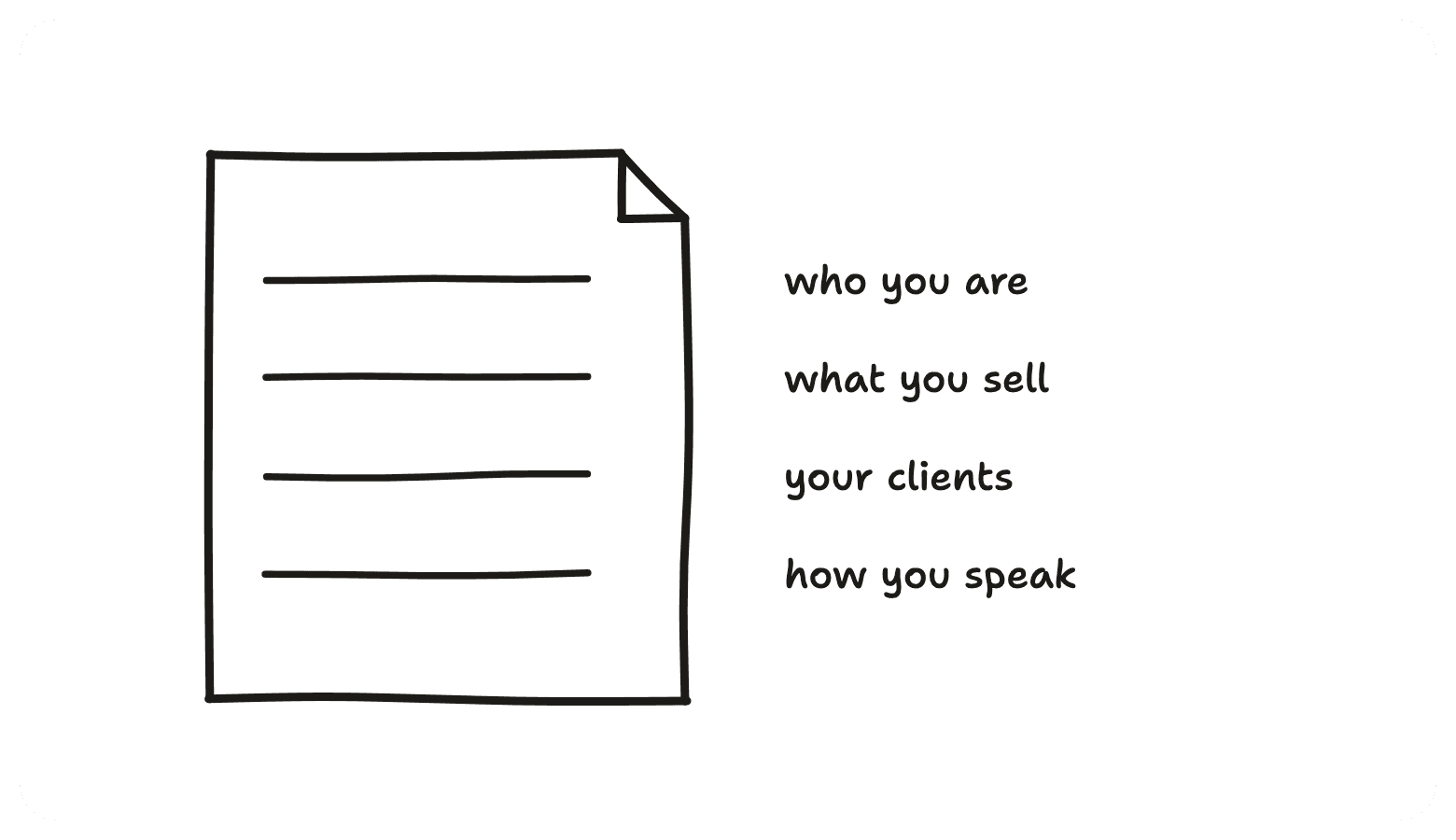
1Who you are
The business, the size, how long it has been going, and where you sit in it. This is the line that stops every answer being written for a generic company of unknown size. Advice for a two person consultancy and advice for a two hundred person firm are different advice, and without this it has no way of knowing which one you are.
2What you sell
The actual products or services, roughly what they cost, and which one brings in most of the money. Be specific. "Consulting" tells it nothing. "Two day AI readiness audits at four thousand pounds, plus a monthly advisory retainer that most clients move onto afterwards" tells it what the business actually is.
3Who your clients are
The kind of people who buy from you and the problem they came to you with. One or two real examples beat any amount of describing a target market. This is the part that changes the most answers, because almost every question you ask is really a question about serving those people.
4How you talk
The words you use for things and the words you never use. Whether you say clients or customers, members or policyholders. British spelling, pounds not dollars. It is a short section and it is the difference between something you can send as written and something you rewrite every time.
5How the place runs
Who does what, the systems you work in, and the way things get done that nobody has written down. Every business has a handful of these and they are invisible to everyone who already works there, which is exactly why they are worth writing once.
6What's going on right now
What you are working on this quarter, what has just changed, what is coming. This is the section that makes an answer sound current rather than generic, and it is also the one that goes stale fastest, so it is the one worth revisiting.
One Honest Bit
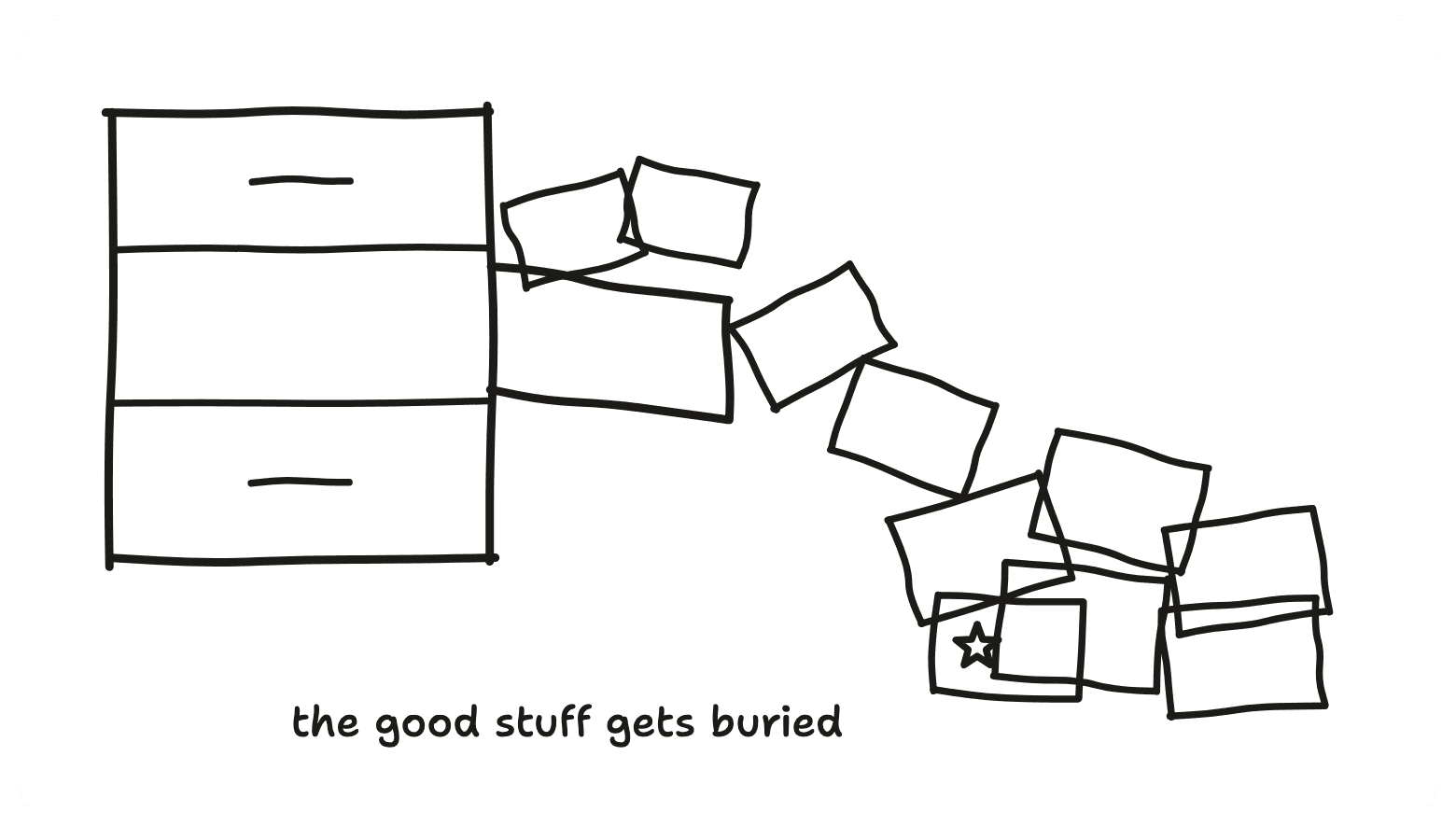
More is not better. The obvious move once this clicks is to give it everything, every document you own, the whole filing cabinet. That makes the answers worse, not better.
Everything you hand it competes for attention with everything else you handed it. Bury three important lines in forty pages of old policies and half finished notes and it has to work out which bits matter, which it will sometimes get wrong. A long stuffed file does not add detail, it hides the detail that was already there. Why your chat gets worse the longer it runs is the longer version of why that happens.
The other promise to make is that you will read what the interview writes before you save it. This file gets read after every prompt, which is what makes it work and is also the risk. A line that does not reflect how your business actually operates does not sit there harmlessly, it tells the AI to do the wrong thing every single time, so one wrong line makes every answer a little worse.
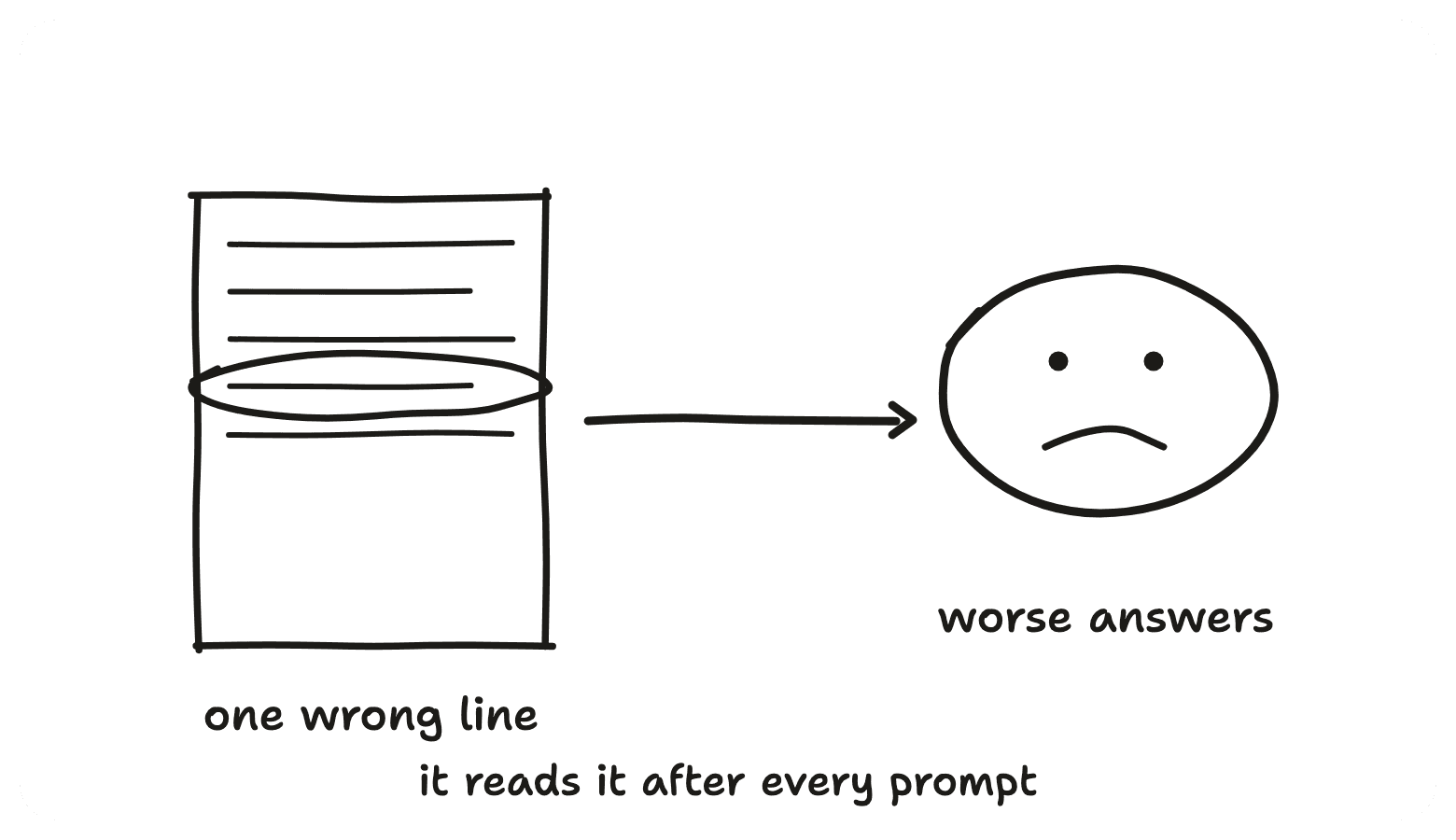
It then becomes your job to feed back on the file and update it as and when, just like you would with a new employee. When an answer comes back wrong in a way the file caused, fix the line, not just the answer.
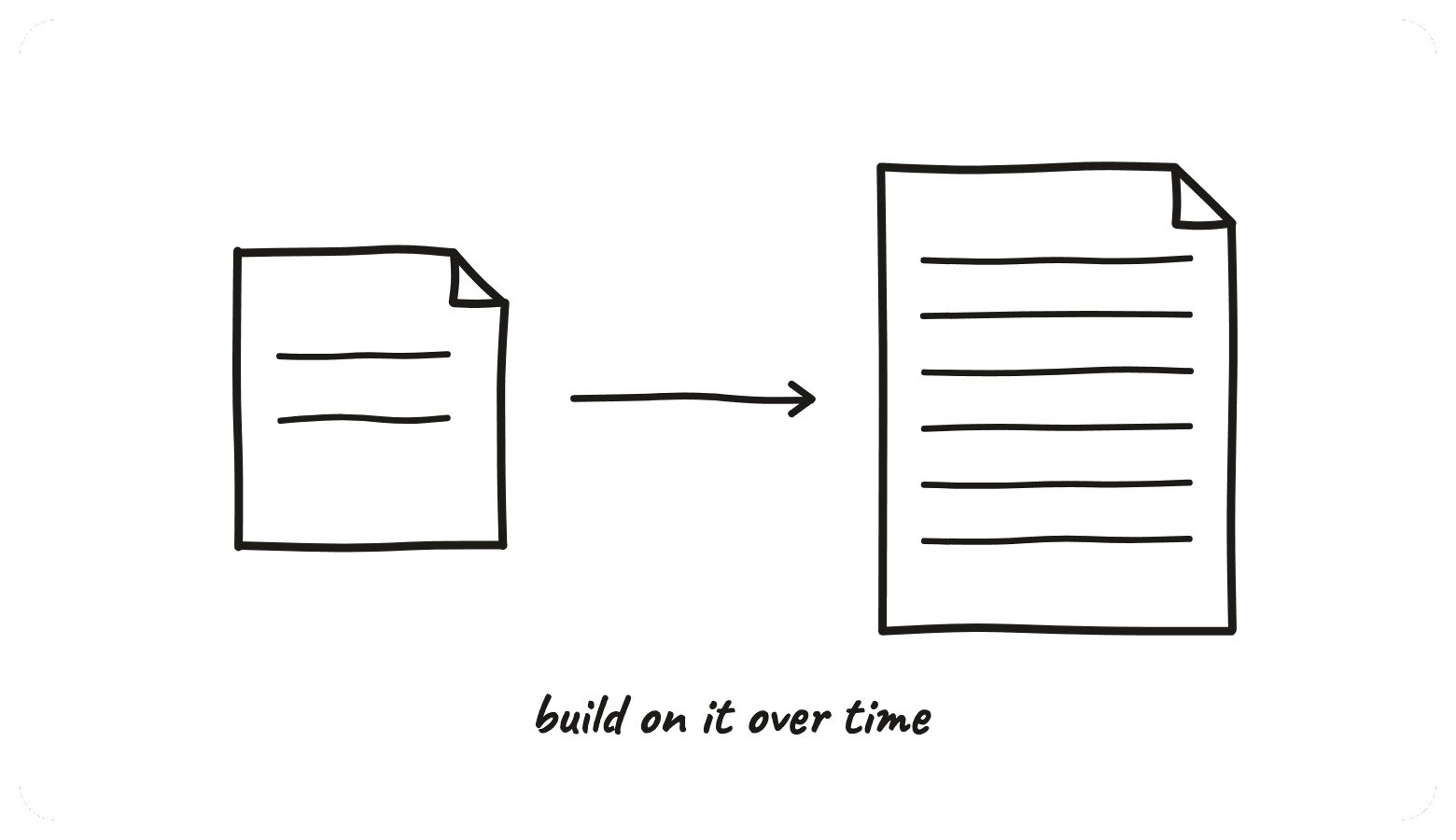
So give it what a good new starter would actually need, nothing more. One document, written once, short enough to read in a couple of minutes. Then build on it slowly. Every time an answer comes back missing something obvious about your business, that is the file telling you which line was not in it. Add that line and move on.
And the honest version of the promise. A background file makes the answers sound like your business. It does not make them right. It still has to be checked, same as work from anyone who joined last week.
Where This Goes Next
That is all three parts. The brief is your agent's personality is part one, the document it reads before every message you send. Tools are how your AI stops being useless is part two, the connections that let it do the job rather than describe it. And this is part three. The brief, the tools, and the context. That is an agent.
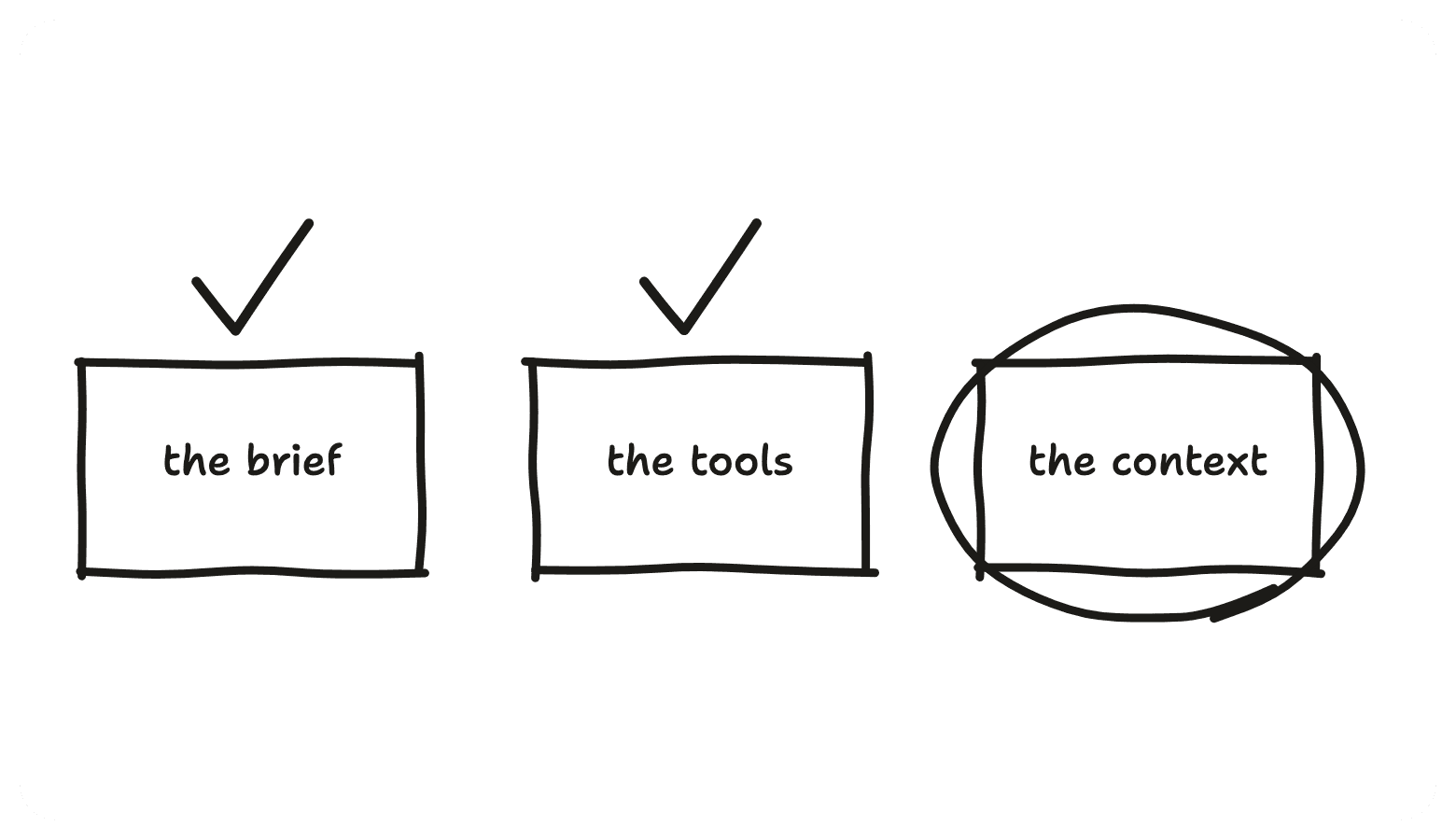
If you have landed here without the overview, an AI agent is a chat with a job is the one pager, all three parts on a single page with the two questions to ask anyone selling you an agent.
Want to get better at this?
Let's set up your agent ecosystem.
This page is one job. The whole thing is a set of them running off the same foundation, the folder your AI works out of, the brief on how you like things done, the accounts it can reach and the skills that run off all of it, so your admin gets done the way you would do it. It is what I teach one to one, on your own machine and against your own work, and the quickest way to find out what yours would look like is a proper chat about it.
Not ready for a call? Start with the free agent series, what an AI agent actually is, and build up from there.