Make your AI stop agreeing with you
Two instructions to paste — one for Claude, one for ChatGPT — so it pushes back instead of flattering you.
Grab your prompt
Paste the right one into your settings (where it goes is just below) and save. That's it — it'll push back from your next message on.
Where it goes
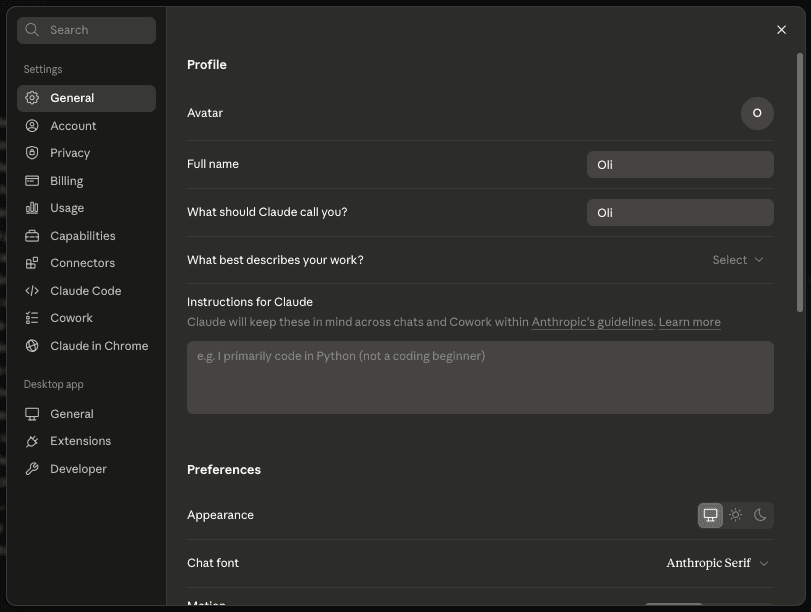
Claude
Settings → General → the Instructions for Claude box. Paste it in and save — Claude keeps it in mind across every chat.
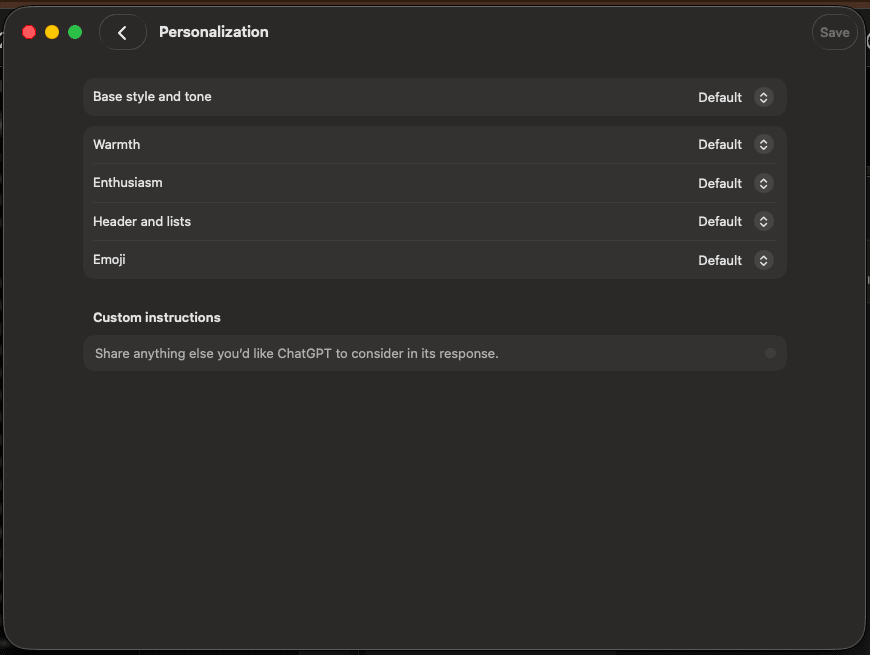
ChatGPT
Settings → Personalization → the Custom instructions box. While you're there, set Warmth and Enthusiasm to Less, and Base style and tone to Candid — those sliders cut the flattery at a level the text can't reach.
The bit that beats any setting
The instruction helps, but the single biggest thing is how you ask. AI leans toward the answer it thinks you want — so if your question signals your preference, it agrees. Strip the signal out:
- -Not “isn't this a great idea?” → “what's wrong with this idea?”
- -Not “is my plan solid?” → “here's my plan — pick it apart.”
Present it flat and ask it to find the holes, and you'll get a straighter answer than any setting can buy you.
Why it works
AI is agreeable by default for two reasons: it's trained on answers people rated — and people rate the reply that flatters them higher — and it reads your wording for the answer you're hoping for, then gives you that.
A custom instruction sits above every chat. Before it writes a single reply, it reads your instruction and frames the answer around it — so you're changing the default once, instead of fighting it every conversation.
It applies everywhere — new chats, old chats, on your phone — until you change it.
The honest bit
- -It's calibrated, not contrarian — on purpose. We didn't write "always disagree," because that just swaps flattery for an AI that argues even when you're right. It's set to push back when it's warranted and agree when you've genuinely got it.
- -It won't make your AI perfectly objective — it nudges the default toward honesty, it doesn't override how the model works.
- -It can still be wrong. The difference is it's now willing to say so, and to push back when you're the one who's off.
- -It'll feel blunter — that's the point. If it tips into harsh, soften the wording (swap "plainly" for "kindly but honestly").
- -It's a default, not a cage. In any single chat you can still say "just brainstorm with me, no criticism" and it'll switch.
Want to get better at this?
Let's set up your agent ecosystem.
This page is one job. The whole thing is a set of them running off the same foundation, the folder your AI works out of, the brief on how you like things done, the accounts it can reach and the skills that run off all of it, so your admin gets done the way you would do it. It is what I teach one to one, on your own machine and against your own work, and the quickest way to find out what yours would look like is a proper chat about it.
Not ready for a call? Start with the free agent series, what an AI agent actually is, and build up from there.